
Thirty years after the downing of the planes belonging to the humanitarian organization “Brothers to the Rescue,” the case has once again become the focus of political debate in Washington and South Florida. A group of federal legislators has requested that criminal charges be considered against Cuban dictator Raúl Castro, whom they hold politically responsible for the decision that resulted in the deaths of four U.S. citizens on February 24, 1996.
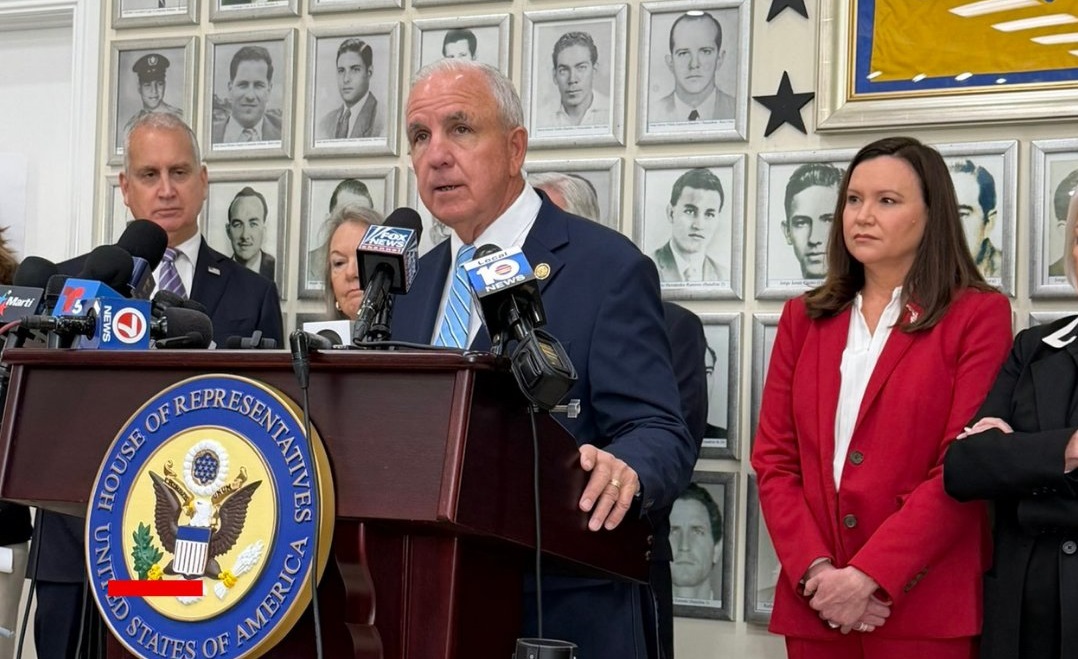
The demand was publicly spearheaded by Congresswoman María Elvira Salazar, who, along with other federal legislators, commemorated the anniversary by accompanying the victims’ families and reiterating the call for accountability.
On her Facebook page, Salazar stated that, along with Mario Díaz-Balart, Carlos Giménez, and Senator Ashley Moody, she recalled the episode that profoundly affected the relationship between the United States and Cuba.
“Four Americans were deliberately killed in international airspace by the Cuban regime. It was an order that came from the top. It’s time for Raúl Castro to be held accountable. For the families. For justice. For a free Cuba,” the congresswoman wrote.
The message not only carries symbolic weight due to the anniversary, but also comes in a political context where policy toward Cuba is once again a central issue in legislative and electoral debate, especially in Florida.
On February 24, 1996, Cuban military aircraft intercepted and shot down two civilian planes belonging to the Brothers to the Rescue organization. The organization was conducting search and rescue flights for rafters in the Florida Straits. Cuban authorities argued that the aircraft had violated their airspace. However, U.S. investigations concluded that the downing occurred in international airspace.
The incident sparked strong international condemnation and accelerated the passage of the Helms-Burton Act in the United States, further tightening the embargo against Cuba. Since then, the case has remained a symbol of bilateral confrontation and a persistent source of pain for the victims’ families.
The congressmen’s call raises the possibility of exploring legal mechanisms under U.S. jurisdiction, given that the victims were U.S. citizens.
International law experts have pointed out that any such process would face significant legal obstacles, including issues of sovereign immunity, jurisdiction, and practical feasibility of enforcement. Nevertheless, the political momentum could translate into further investigations or a review of existing legal mechanisms for cases involving alleged human rights violations against U.S. victims.
For now, no formal legal case has been announced, but the statement brings back to the forefront the discussion of individual responsibility within the Cuban government’s chain of command in 1996.
Impact on Florida and the Cuban-American Community
In Miami-Dade, home to a large Cuban-American community and relatives of the victims, the anniversary is traditionally commemorated with public events and official statements.
The demand for justice has been constant for three decades and is part of the political discourse of several representatives from South Florida in Congress. The renewed focus on this issue could have implications for both the federal legislative agenda and the state electoral landscape, where policy toward Cuba continues to be a mobilizing factor.
Thirty years later, the downing of the planes remains one of the most sensitive episodes in the recent history of relations between Washington and Havana.
The call for criminal charges against Raúl Castro not only responds to a long-standing demand from the families but also fits into a broader geopolitical context, marked by persistent tensions, sanctions, and debates about international responsibility.
Beyond the legal challenges, the congressmen’s pronouncement places the case back in the public debate and reopens questions about transnational justice, accountability, and historical memory in the relations between the two countries.