
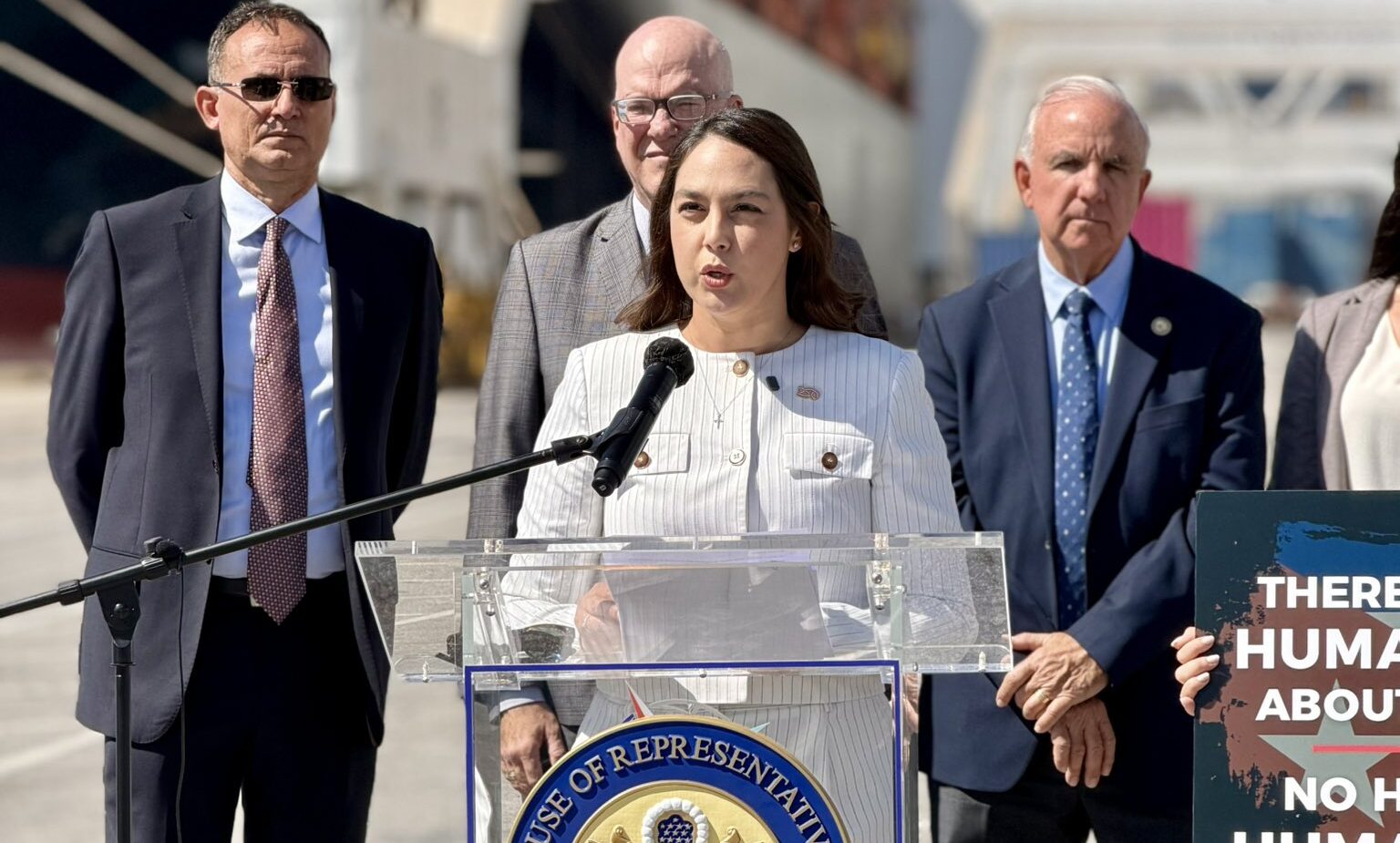
Miami-Dade County Commissioner Natalie Milian Orbis publicly rejected on Friday any potential agreement between the United States and the Cuban government that would leave the island’s political system intact.
In a message posted on her Twitter account, the commissioner stated that “any negotiation that preserves a one-party communist dictatorship while ignoring the fundamental requirements of the Libertad Act is unacceptable.”
Milian Orbis was reacting to the announcement by President Miguel Díaz-Canel, who earlier in the morning confirmed talks with U.S. officials, allegedly initiated by Raúl Castro.
According to the commissioner, this reflects the growing pressure the regime is facing amid the country’s economic and political crisis.
The official emphasized that U.S. law is clear in stipulating that sanctions can only be lifted when Cuba initiates an irreversible transition to a multiparty democracy, fully respects human rights and civil liberties, and takes concrete steps to return or compensate Cuban and Cuban-American families for confiscated property.
In that regard, she defended the pressure policy applied by President Donald Trump’s administration toward Havana and considered that the tightening of sanctions has helped force the Cuban government to the negotiating table.
In her view, “firmness, not concessions,” is what compels authoritarian regimes to respond.
However, the commissioner warned that international pressure must translate into concrete political transformations.
She noted that as long as the regime continues to refuse to allow free and fair elections, persecutes dissidents, and refuses to recognize property rights, the United States should not legitimize or fund its continued hold on power.
Milian Orbis further stated that the Cuban exile community has made too great a sacrifice to accept an agreement that would leave the island’s people without democracy, human rights, or the restitution of confiscated property—principles enshrined in the Libertad Act, also known as the Helms-Burton Act, signed by President William Clinton on March 12, 1996.
The commissioner’s statements come amid a growing political debate in the United States, following the Cuban government’s acknowledgment of contacts with Washington, a scenario that various political actors in the exile community have interpreted as a sign of the regime’s weakness in the face of the island’s internal crisis.