
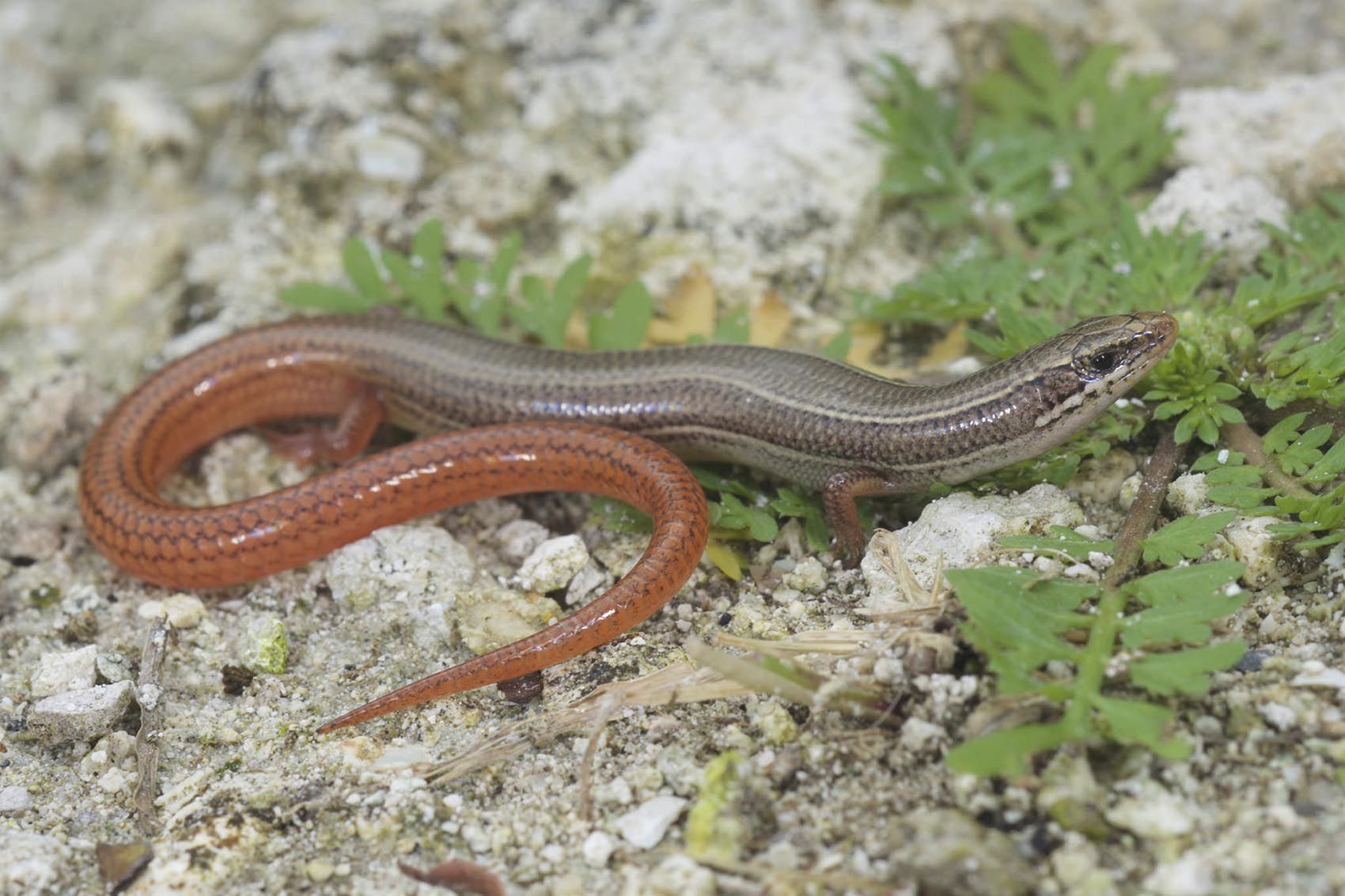
The Trump administration agreed to finalize protections under the Endangered Species Act for 11 plant and animal species in South Florida, following federal litigation that warned of their potential extinction and amid a rollback of environmental regulations that, according to expert organizations, poses additional risks to the region’s ecosystems.
According to public broadcaster WLRN, the settlement establishes specific dates for the protection of several threatened species. At the same time, the recent expansion of the American wood stork’s range led to its removal from the list of protected species.
Under the agreement, the U.S. Fish and Wildlife Service must define by July 16 the protection measures for the Florida Keys mole skink, the Rim Rock crowned snake, and the Key ring-necked snake, all restricted to habitats in the Florida Keys and surrounding areas.
In addition, eight rare plants, including the Big Pine partridge pea and the Everglades bully, will receive protection no later than January 20, 2027. In 2022, the agency had proposed specific measures to preserve thousands of acres in Collier, Miami-Dade, and Monroe counties, a decision that must now be finalized according to legal deadlines.
The lawsuit was filed by the environmental organization Center for Biological Diversity, represented by the Jacobs Public Interest Law Clinic for Democracy and the Environment at Stetson University College of Law.
According to the organization, the U.S. Fish and Wildlife Service failed to meet the mandatory deadlines of the Endangered Species Act to finalize the protections, while the species face “extinction-level threats” from urban development and rising sea levels.
Among the plants included in the agreement, three are affected by the presence of the “Alligator Alcatraz” migrant detention facility in the Everglades.
Alongside the ratification of new protections, the Trump administration finalized the removal of the wood stork from the Endangered Species Act list, making it one of 36 species removed from the federal registry during this term.
Listed as endangered in 1984 due to habitat loss in South Florida, the wood stork’s breeding population declined by more than 75% before its inclusion. Today, the population is estimated at between 10,000 and 14,000 pairs, more than double the number in the 1980s, according to the U.S. Fish and Wildlife Service.
The agency’s director, Brian Nesvik, stated in a press release that “the wood stork’s recovery is a true conservation success story thanks to the hard work of our partners.” He explained that the current administration seeks to “remove federal protections from species that no longer require them” and expressed pride in the wood stork’s recovery.
For her part, Elise Bennett, Florida and Caribbean director for the environmental organization, warned that although the wood stork has expanded its range, it has not achieved recovery goals in South Florida. She criticized President Trump’s recent reductions in environmental regulations, including measures that, according to Bennett, “eliminated protections under the U.S. federal water law (Clean Water Act) for the wetlands on which the wood stork depends for food.”
Bennett added, “The wood stork’s overall recovery and stability demonstrates that the Endangered Species Act can successfully combat extinction and bring species back to health, but the Trump administration’s environmental rollbacks raise significant concerns.”
The Endangered Species Act requires that proposed protection for a species be implemented within one year. The Center for Biological Diversity noted that the U.S. Fish and Wildlife Service failed to meet this requirement for the Florida Keys mole skink, as well as for the two snakes and plants included in the settlement agreement.
These species, all endemic to South Florida, are under pressure, WLRN points out, not only from the advance of real estate development but also from the impact of climate change, which is progressively raising sea levels and affecting the viability of their habitats.
The case of the American wood stork serves as an example of relative success in a general landscape of difficulties: although its population increased after its inclusion on the federal list—and its final removal from protections is expected to take effect on March 12—local environmental impacts and regulatory gaps resulting from recent policies raise new questions about the effectiveness and future of conservation in the region.