
Billionaires in South Florida are creating their own private schools to address the lack of available spaces for wealthy families moving to the region. According to The Wall Street Journal, this is already influencing relocation decisions to Miami, West Palm Beach, and other high-income enclaves.
The pressure on existing school supply is reflected in concrete figures in these new projects. Real estate developer Jeff Greene allocated $50 million to purchase land and build The Greene School, plus another $10 million for a second building.
Tech entrepreneur John Marshall earns approximately $30,000 annually at BaseCamp305 and pays teachers salaries exceeding $80,000, according to local media outlets such as NBC Miami.
The problem isn’t so much the cost for families moving to South Florida, but rather the lack of available options. The area’s private schools are full, several are expanding, and yet they still don’t have enough desks for the children of newly relocated executives.
In West Palm Beach, Greene told The Wall Street Journal that he noticed the shortage shortly after moving from California. His response was to create a private campus from preschool through 12th grade where each class has two teachers and school activities continue until students are called to a timed digital line for dismissal.
This project, with The Greene School campus, combines features of a technology center and a summer camp: it offers 3D printing classes, flight simulators, a tennis academy, and sailboats. A group of students is also building a small airplane from scratch, which, according to the students quoted by the newspaper, will be certified by the Federal Aviation Administration.
To secure the land in West Palm Beach, Greene began by purchasing an abandoned car dealership and then expanded the property to seven acres (equivalent to 2.8 hectares) by acquiring neighboring businesses, including a roofing company, according to The Wall Street Journal.
The school charges $50,000 a year, although nearly half of its students receive financial aid. Greene told the New York newspaper that it is close to breaking even after previously losing $2 million annually.
Florida recently passed a series of laws to alleviate the cost of private education, including one that provides annual vouchers of about $8,000 per student to families who choose private schools, according to The Wall Street Journal. Even so, among the wealthiest families, the main obstacle remains the shortage of available spaces.
Marshall, founder of BaseCamp305, told NBC Miami that his motivation stemmed from reflecting on what he wanted for his daughter’s education when she turned four: “The more we delved into what we wanted in a school, the more we thought we should create our own.”
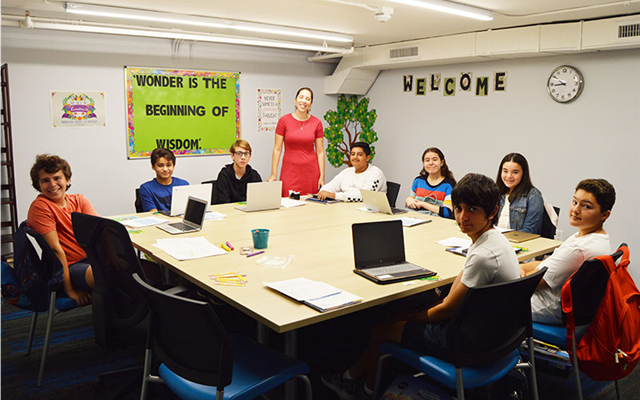
The school opened in 2019 and three years later secured a permanent location near Collins Avenue and 23rd Street in Miami Beach. It currently serves about 50 students with a curriculum focused on entrepreneurship, project-based learning, and presentations, while technology plays a central role with robots and 3D printers.
Marshall also explained to The Wall Street Journal that the model doesn’t aim for immediate profitability: “That’s how private schools have historically been founded.” He added that they originate from families trying to meet a need and then expand over time.
He also defined the project’s aspiration: “The entrepreneurs are coming in with a vision of where the world is headed. There’s nothing wrong with bringing more dynamism. When schools are built, the goal is to raise the bar for everyone.”
BaseCamp305 began by renting a floor in Emilio Estefan’s office building and now operates two campuses: one on Collins Avenue for preschool through second grade and another west of Fifth Street for third through fifth grade, according to Telemundo 51.
After five years of ups and downs, it is building a multi-million dollar third campus to expand its offerings to higher grades, with new classrooms, outdoor space, and an event area for community use, scheduled to open this fall.
Marshall described the main obstacle in an interview with NBC Miami: “Land prices are astronomical. But simply getting something done takes a lot of time, a lot of energy, and, to some extent, a lot of friction with the community and the city. I think that was a big challenge for us.”