
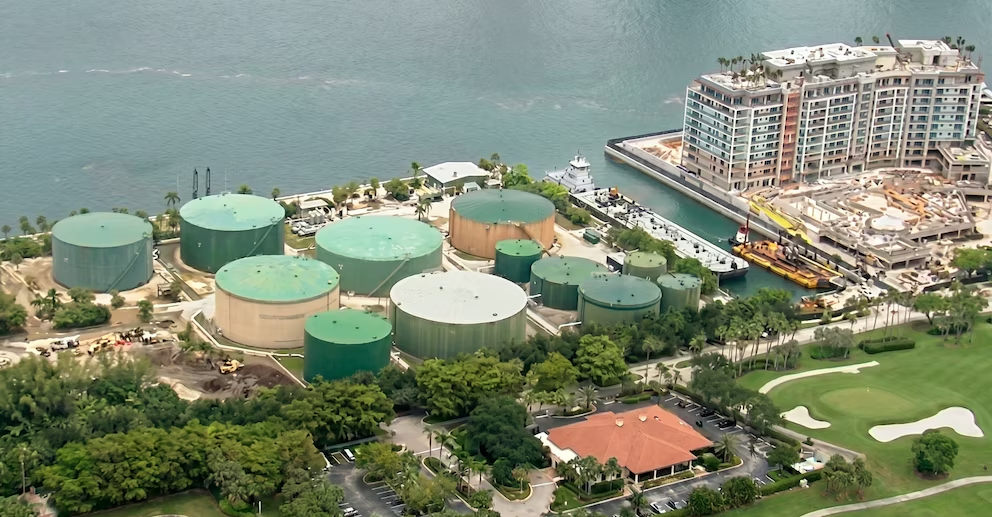
Miami-Dade County approved the expropriation of the 10-acre (4.05-hectare) fuel depot that supplies PortMiami, in a dispute that will determine how much the county must pay for land whose current owners seek to develop into condominiums.
The County Commission authorized the process by a vote of 11 to 1, according to the voting record.
The resolution allows Mayor Daniella Levine Cava’s administration to claim ownership through a court-ordered sale: the county can post a bond based on its estimated value and take the case to court, where a jury will determine the final price.
The conflict centers on a discrepancy in valuations, which the administration itself acknowledged. In a memo, Levine Cava indicated that Miami-Dade received three appraisals: $25 million if the property could only operate as a fuel terminal; An appraisal of $180 million; and another of $430 million if the site were zoned for residential development.
This appraisal scheme and the “declaration of ownership” mechanism to move toward a jury trial were also reported by the Miami Herald.
The land was acquired last year for approximately $180 million by real estate developers who are now its owners.
In parallel, during a nine-month mediation process, the county administration made progress on a confidential agreement to purchase it for around $400 million, a figure that Levine Cava considered too high and that accelerated the shift toward litigation.
Commissioner Raquel Regalado was the only one who voted against it, and Commissioner René García did not attend the meeting. Regalado warned: “This is a decision that will impact this county for the next 50 years and should not be taken lightly.”
The Miami-Dade administration maintains it has a legal tool to limit the property’s price and maintain a lower valuation.
According to Vice Mayor Roy Coley, in the 1970s the county obtained a 1978 agreement regarding 1.62 hectares (4 acres) of the site that required the maintenance of a fuel facility there, as part of a zoning change requested at the time by the property owners.
Coley stated that only the County Commission, which has authority over Fisher Island’s zoning, can modify that agreement. The 1978 document, according to a copy released by Levine Cava’s office, stipulated that the property “will be restricted” to the transportation and storage of petroleum and other fuels.
Levine Cava told reporters after the vote that, although the negotiating team kept her informed of the process, she only learned of the agreement at the end. “They kept me informed at all times, but there were some details I didn’t know,” the mayor stated. “Especially the agreement.”
The approved legislation authorized the administration to submit a final offer up to 15% above the county’s appraised value for the depot. Coley indicated that the final value the administration will use will be determined based on the three appraisals already obtained.
The conflict escalated after the administration failed two years ago in its attempt to purchase the facility when it went on the open market. Later, the new owners, a group that includes Russell Galbut and Related Group, announced plans to close the terminal and build a luxury condominium complex.
The owners inherited an agreement requiring them to maintain fuel sales until May 2027. After that date, the development project would leave PortMiami without a direct way to refuel ships.
“The current and future situation of our port is precarious,” Jason Liberty, CEO and president of Royal Caribbean, told the commissioners. He appeared alongside other industry executives to support the legislation championed by Gilbert.
According to the administration, the agreed-upon purchase plan would be financed with revenue from fuel sales and port fees over 20 years.
The administration maintained that, since PortMiami’s revenues and expenses are separate from the county’s main budget, the transaction would not use funds from the Miami-Dade general budget.
Levine Cava removed two advisors who were leading the negotiations from the process: Chief Operating Officer Jimmy Morales and Port Director Hydi Webb. He then announced that he would pursue legal action to obtain a lower price.
In a statement, the developers, HRP Fisher Island, downplayed the scope of the restriction on the portion of the storage facility covered by the agreement. They indicated that this land is not needed to develop a condominium complex that, according to their projections, will generate $2.5 billion in sales.