
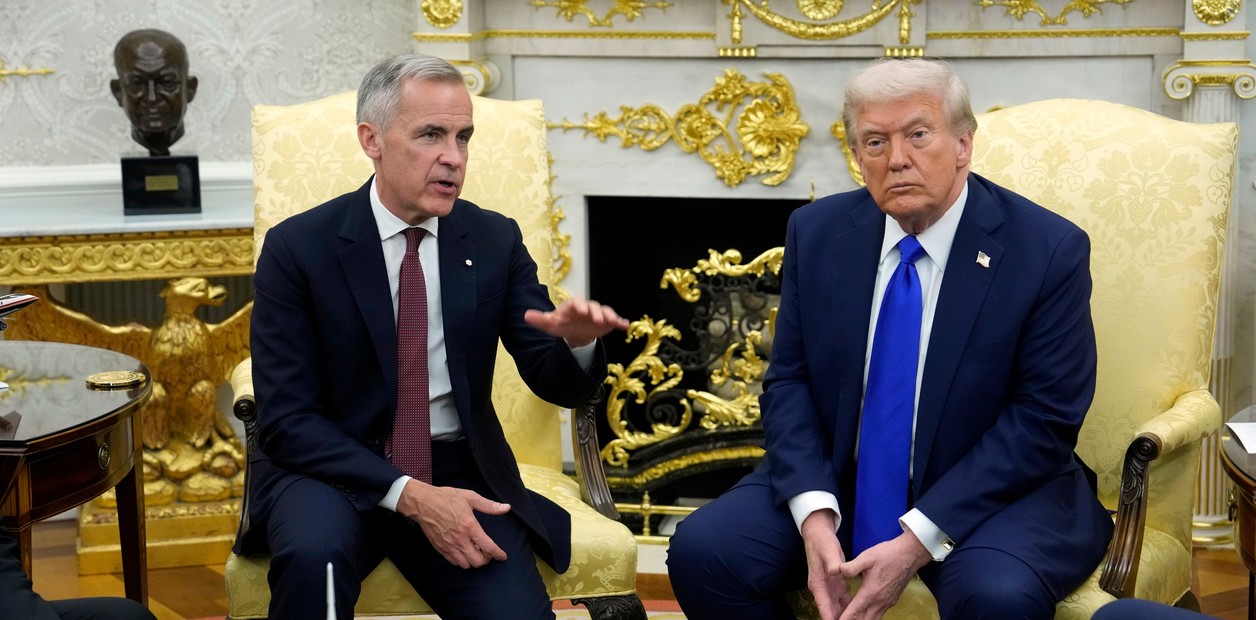
Canadian Prime Minister Mark Carney announced Saturday that Canada will retaliate against the United States following the collapse of trade negotiations with the Trump administration. Carney stated that, starting September 8, Canada will match the new tariffs that went into effect at midnight, dollar for dollar.
In a televised address, Carney said that his country “cannot accept” the U.S. proposal to reach a trade agreement and avoid the tariffs, and will not back down.
“Canada will match those tariffs dollar for dollar to protect our workers and businesses,” the prime minister said, after ordering his country’s negotiators to abandon the talks and return to Ottawa.
“While significant progress was made, that progress was not enough to meet our objectives for Canadians,” he explained.
He also anticipated that Canadian retaliation would focus on sectors such as steel, dairy products, appliances, and electronics, matching the 50% tariffs that Washington began implementing Friday at midnight.
The new tariffs affect approximately US$20 billion worth of Canadian exports.
Canada’s response will take effect on Tuesday, September 8.
The breakdown represents an abrupt shift after nearly two weeks of frantic negotiations and after Trump himself announced a three-day pause in the implementation of the tariffs on Tuesday, assuring his social media accounts that both countries “HAVE A DEAL.”
However, differences resurfaced in the final hours of the talks.
The Canadian Prime Minister accused the United States of introducing “unfair changes” in the negotiations.
Carney accused Washington of introducing last-minute changes to its terms, which he called “unfair” and “uneconomical,” and which, he asserted, cast doubt on “the reliability of any agreement.”
“We recognized from the outset that the United States has changed and that we will not return to our old relationship,” the Prime Minister warned. “Canada has what the world wants, and we will not allow any one nation to determine our future.”
Washington, on the other hand, blamed Ottawa for the failure. U.S. Trade Representative Jamieson Greer stated that Canada “refused to finalize the trade agreement on the terms agreed upon earlier this week.”
According to Greer, the United States had offered Canada “the best treatment of any major exporter” to the U.S. market, but new demands from Ottawa and a reversal of previous commitments disrupted the balance achieved during the negotiations.
One of the main sticking points was Canada’s retaliatory trade measures against the United States, including provincial bans on the sale of certain American alcoholic beverages, introduced in 2025 in response to previous tariffs imposed by the Trump administration.
The new US tariffs cover products ranging from construction materials and certain clothing items to hockey sticks and alcoholic beverages.
Greer stated that Washington had also offered “significant tariff reductions” on Canadian steel, aluminum, automobiles, and lumber, although he did not specify the percentages.
According to Bloomberg, during the talks, the United States had proposed reducing some tariffs on automobiles and metals from 25% to 15%.