
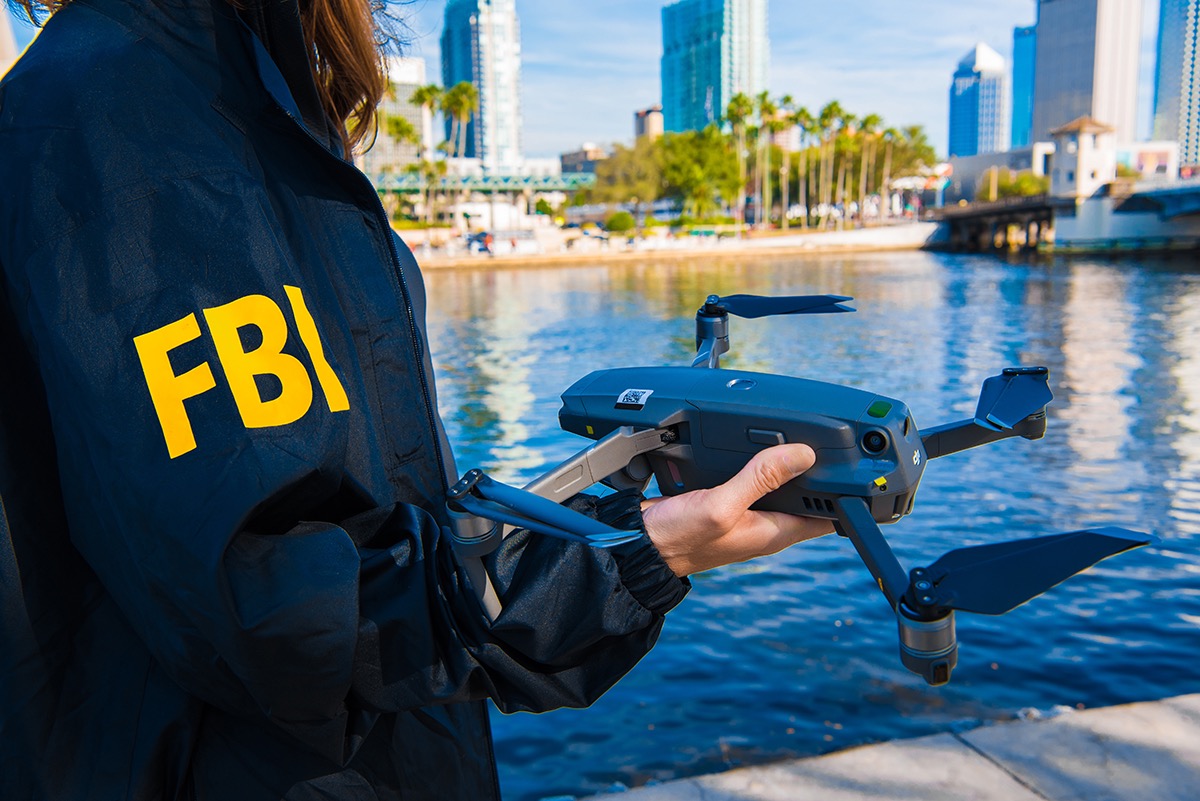
The FBI’s Miami office reported that 95 drones were seized in South Florida during the temporary flight restrictions imposed for the 2026 World Cup, a measure aimed at protecting fans, players, and critical infrastructure around the tournament’s official events.
This figure is part of a broader crackdown: more than 500 drones have been confiscated in the restricted airspace of the 11 U.S. host cities since the World Cup began, according to the federal agency.
In Miami, the enforcement efforts are concentrated in the no-fly zones established by the Federal Aviation Administration (FAA) around Hard Rock Stadium and the fan fest at Bayfront Park.
According to NBC Miami, two content creators in the city said they received an unexpected visit from federal agents after launching a drone from their penthouse balcony in downtown Miami, unaware that they were operating within restricted airspace during the tournament.
Federal authorities explained that unauthorized flights near matches and official activities are considered a security risk. The FAA maintains that the restrictions are aimed at ensuring the safety of spectators and players, while the FBI added accident prevention and the protection of sensitive facilities among the reasons for the operation.
According to the FAA, all 2026 World Cup stadiums and their surrounding event spaces have been declared “no-drone zones.” This means that taking off, landing, or flying a drone without authorization within these areas constitutes a serious violation of federal and local regulations.
In South Florida, the temporary flight restrictions encompass the area around Hard Rock Stadium, the FIFA Fan Festival, and other tournament-related events. The Bayfront Park area will remain under no-drone restrictions until July 5, while the stadium area will remain under restrictions until July 18, after the third-place match.
The FBI Miami and its law enforcement partners said they will enforce these temporary flight restrictions during the World Cup matches in South Florida and during the Fan Festival.
The agency asked operators to check airspace limitations using the FAA-approved B4UFLY apps or the official website tfr.faa.gov before launching a drone.
Brett Skiles, Special Agent in Charge of the FBI Miami, summarized the objective of the operation in an official statement: “The FBI is enforcing no-drone zones in South Florida in support of the World Cup matches and the Fan Festival.”
He added: “Public safety is our top priority. Our agents and selected law enforcement partners have Department of Justice authority to use specialized mitigation tools to intercept and seize drones that violate these temporary flight restrictions.”
Fines that can reach $100,000 and a year in prison
The answer to the central question for any drone operator is straightforward: you cannot fly a drone without authorization near the World Cup events in Miami, and doing so can result in immediate confiscation of the device, federal fines, and criminal charges.
According to the FBI and the FAA, violations can lead to civil penalties of up to $75,000 per violation, criminal fines of up to $100,000, and up to a year in prison. The federal agency is also authorized to intercept and seize the drone using specialized mitigation tools.
The FAA noted that it recently launched the Drone Expedited and Targeted Enforcement Response initiative, known as DETER, to expedite the identification and enforcement of penalties for drone violations. This system will be used during the World Cup to strengthen surveillance and response capabilities in restricted areas.
The aviation authority added that even experienced remote pilots or those with standard flight clearances are prohibited from operating during the active windows of temporary restrictions surrounding World Cup events.
The agency also indicated that federal forces are legally authorized to detect, track, and assess unauthorized flights, and to take action against aircraft entering restricted airspace while preserving evidence for potential enforcement actions.