
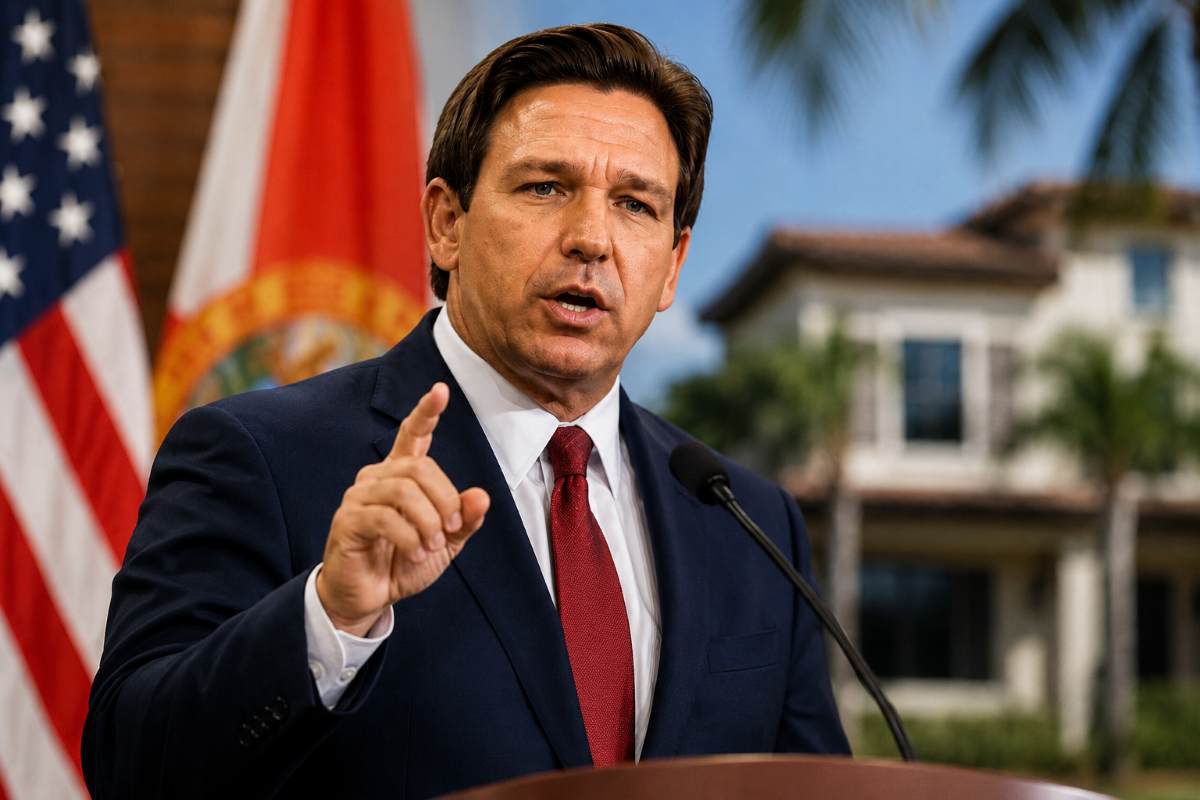
Florida Governor Ron DeSantis has called a special session of state legislators to begin next Monday to debate a reform that seeks to drastically reduce property taxes on primary residences.
The initiative aims to place a constitutional amendment on the November ballot. According to Local 10, the goal is to expand the tax exemption for homeowners and move toward the eventual elimination of property taxes on primary residences, one of the most hotly debated economic issues in the state.
During a presentation in Tampa, DeSantis explained that the plan would initially raise the primary residence exemption to $250,000. According to the governor’s estimates, this measure would eliminate property taxes for approximately 60% of homeowners with primary residence exemptions in Florida.
The proposal would also require the Legislature to develop a timeline for phasing out these primary residence taxes. DeSantis stated that if the exemption reached $500,000, approximately 92% of homeowners would be exempt from the tax.
“The main purpose is to exempt primary residences from property taxes,” the governor said during his presentation, according to Local 10.
The bill needs broad political support to move forward. The proposal must receive the support of 60% of the state House of Representatives and Senate to place on the ballot. Then, it will require a 60% majority vote in November to be added to the Florida Constitution.
The initiative includes several measures aimed at reducing the financial impact on local governments. According to DeSantis, the remaining revenue from taxes on commercial properties and non-primary residences would be allocated exclusively to essential services, such as public schools, police, and fire departments.
The plan also includes benefits for small businesses. According to Local 10, the proposal would reduce the annual cap on property tax increases from 10% to 5%, a change that could ease the tax burden on businesses and entrepreneurs.
Another provision aims to prevent the reform from becoming an incentive for new residents. The bill would require those moving to Florida to wait up to five years before receiving the full benefit of the primary residence tax exemption.
In addition, the governor indicated that he will push for the creation of a state trust fund to provide grants to local governments, especially in rural areas with lower tax revenue capacity.
However, the proposal faces skepticism within the state legislature itself. The Florida Senate expressed reservations about the possibility of implementing overly broad cuts that could negatively impact the revenues of rural counties and small municipalities.
The House of Representatives already passed its own proposal this year regarding primary residence tax exemptions, although with significant differences compared to DeSantis’s plan. That initiative maintained school funding and eliminated some taxes immediately, without a phased transition.
Criticism also arose from the Democratic Party. According to Local 10, the Democratic leader of the state House, Fentrice Driskell, warned that even moderate reductions in property taxes could seriously impact local governments.
Driskell argued that this revenue funds essential services such as law enforcement, first responders, libraries, and community programs. She also noted that many residents are more concerned about rising property insurance rates than about property taxes.
DeSantis rejected the possibility of offsetting the reform with new taxes and asserted that Florida has a strong budgetary position to sustain the proposed tax relief. Now, the discussion will be in the hands of the legislators, who must act quickly to finalize the bill before the November elections.